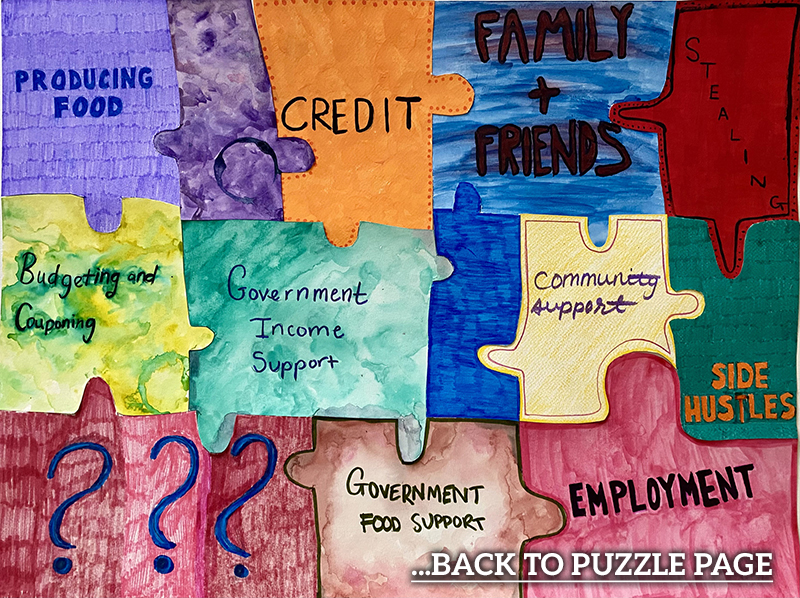
Making Do: Government Food Support
For many, keeping enough food in the house during pregnancy and throughout the early years of childhood is difficult. In the United States there are federally administered food programs that support households, for example, the Supplemental Nutrition Assistance Program (SNAP) and the Special Supplemental Nutrition Program for Women, Infants and Children (WIC).
Some participants in both the survey and ethnography were recipients of these programs. Others talked about not being eligible for these programs but still struggling to afford food.
“Honestly? SNAP just isn’t enough.”
—Survey Participant
“If it wasn’t for WIC my child would be starving.” —Survey Participant
Canada has no equivalent federally funded food programs for pregnant women, breastfeeding mothers, or for formula access.
43% of U.S. survey participants had received support from WIC at some point since September 2021.
20% of U.S. survey participants received SNAP benefits at the time of the survey.
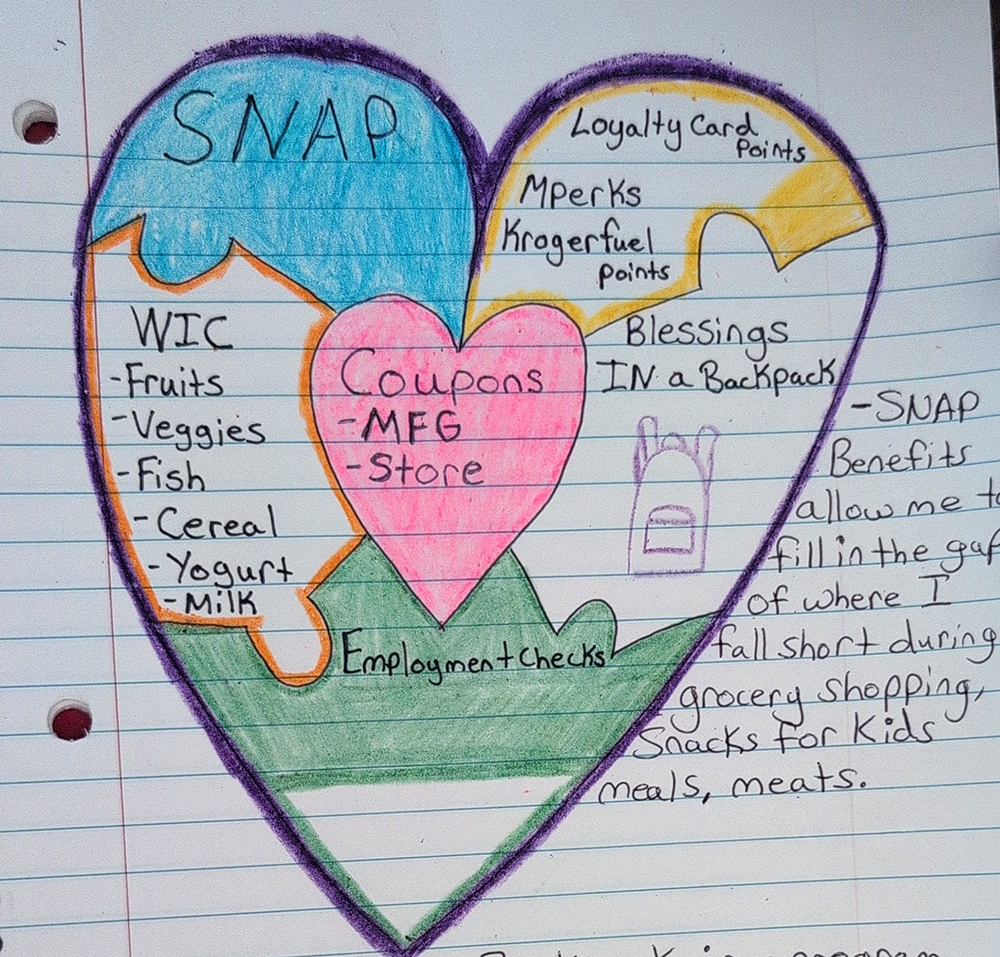
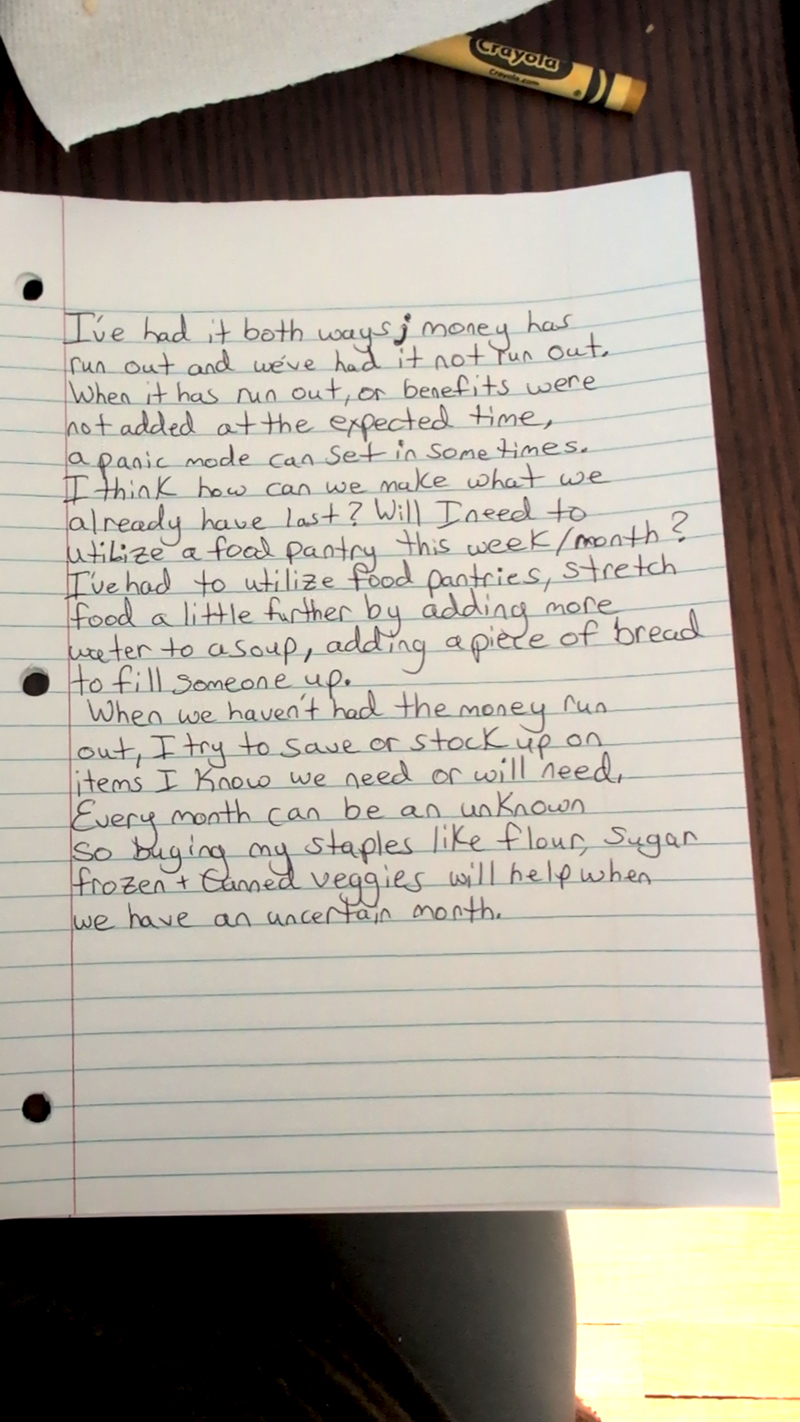
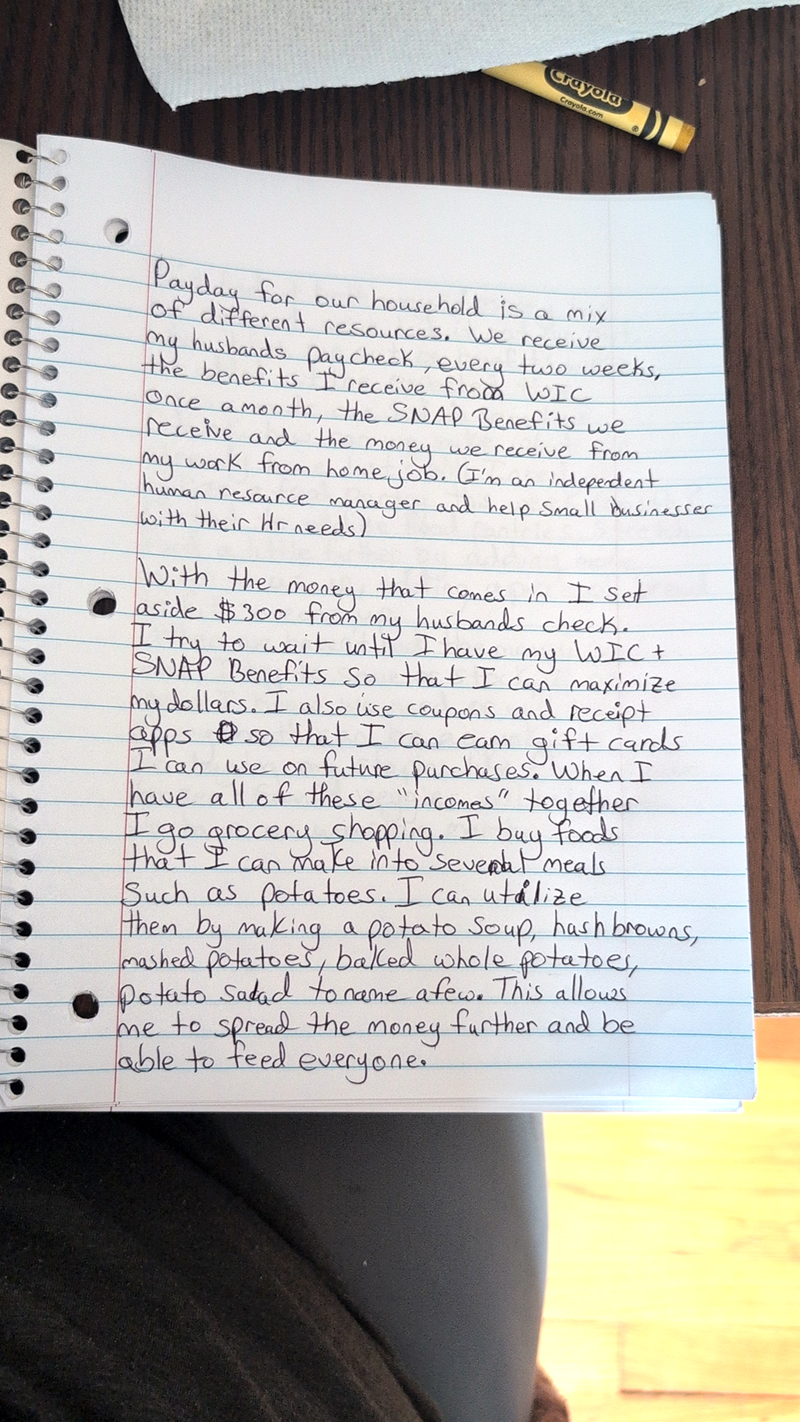
Racheal, United States
39% of food insecure households had not received WIC benefits.
34% of participants ineligible for WIC were living in food insecure households.
“My payday… My payday is hard to define. It’s every other Friday for one job, once every two weeks when a check comes in the mail for the other. The first of the month for SNAP, the fifteenth (I think) for WIC. I try to use my bank account (usually in the form of Apple Pay) for everything that SNAP and WIC don’t cover. WIC is for vegetables, fruits, bread, tofu, eggs, milk. SNAP is for any other food from the store. The most “regular” out of pocket expense I have is my coffee—plain iced lattes whenever I happen to be in a bigger town to get one. It’s the only luxury I allow myself. Other out of pocket feeding expenses would be things like eating out and buying paper plates and plastic utensils. (Our kitchen in our house isn’t finished, so we only have a small bathroom sink to wash dishes in.) I try to be careful so our money doesn’t run out. If it does, I lean on my mom for help with things like paying for piano lessons or ordering school supplies. I try to make sure that my kids aren’t affected. If it’s getting close, though, I stop spending money on myself. I’m at that point right now – one of the most unhinged things I do to scrape by is keep a collection of all of the candy and treats people give my baby, who’s too young for more than just a taste. When we are low on food at home, I use that candy stash to fill in for meals when I’m hungry. Today I had three Hershey’s kisses and a mini KitKat bar for lunch. When the money lasts all month, though, I feel optimistic—I might even transfer some of the leftover to my savings account!”
—Angela, U.S.
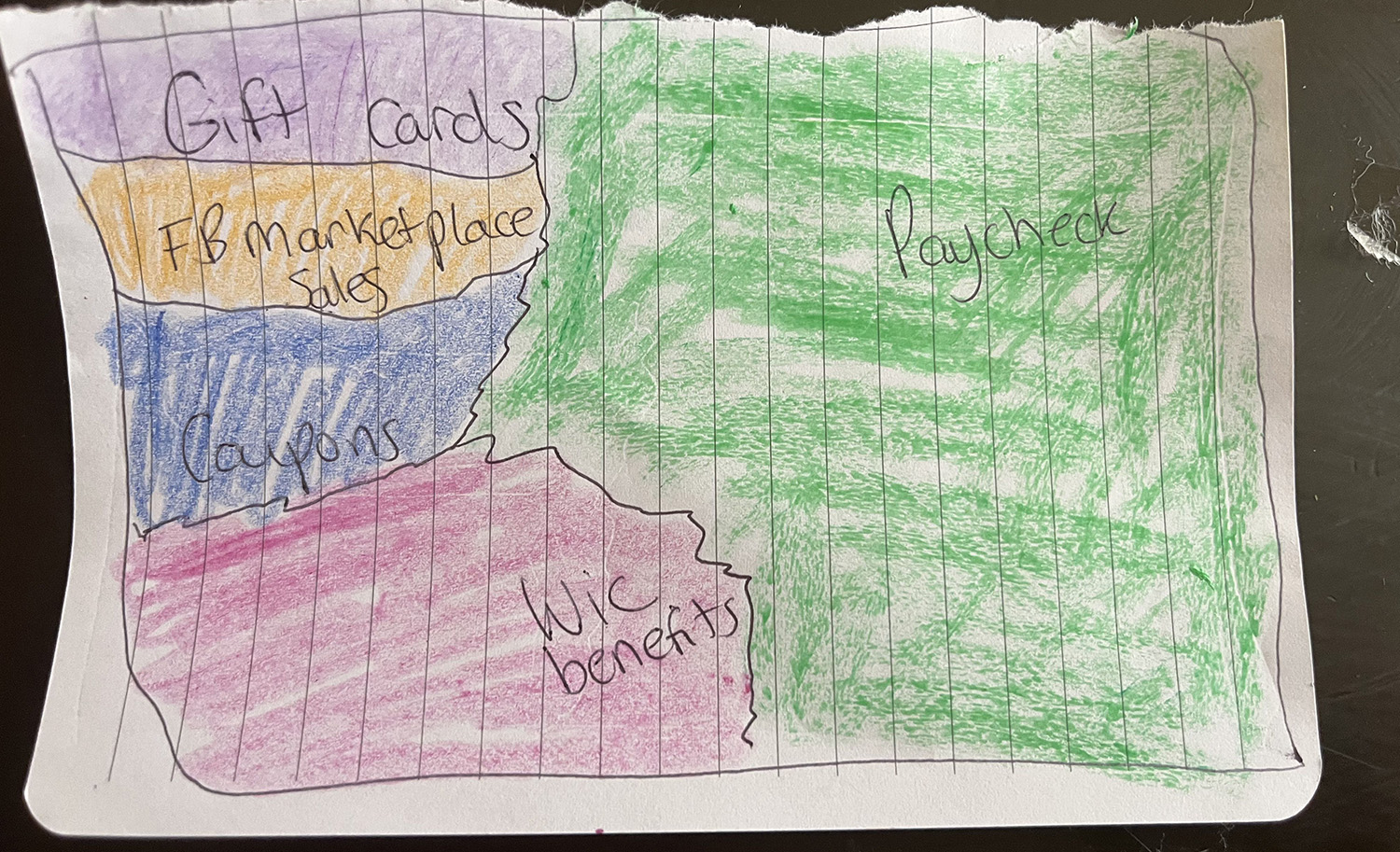
Alicia, United States
“I would like to see additional support (financial) given to families in the first years of life, regardless of income level. We make too much to qualify for WIC or SNAP but we still struggle paycheck to paycheck.” —Survey Participant
“Programs like WIC and SNAP should be expanded and applied to all people with children and a household income below 150k automatically; no application needed.” —Survey Participant
“My husband became a grad student since this August and we lost our income. However, we got approved for WIC and SNAP and we can raise our son without major financial concerns. We can afford to buy healthy food for our son. We are very grateful.” —Survey Participant
“It took 2 months to get approved for SNAP when I was unable to work for health reasons.” —Survey Participant
Racheal, U.S.
“I was able to use WIC to purchase my child’s formula. If we did not qualify for WIC I would not have been able to afford formula at all.”
—Survey Participant
“The WIC program was helpful in getting basic necessities, I loved always being able to have milk, cheese, eggs, yogurt and peanut butter in the house, as well as the fruits and vegetables I was able to get.”
—Survey Participant
How WIC and SNAP benefits are used.
—Rachael