“This project emerged in a time of crisis. We wanted to create a space for people to share the wholeness of their experience in the creative ways that they chose.”
—the Fed Family Research Team
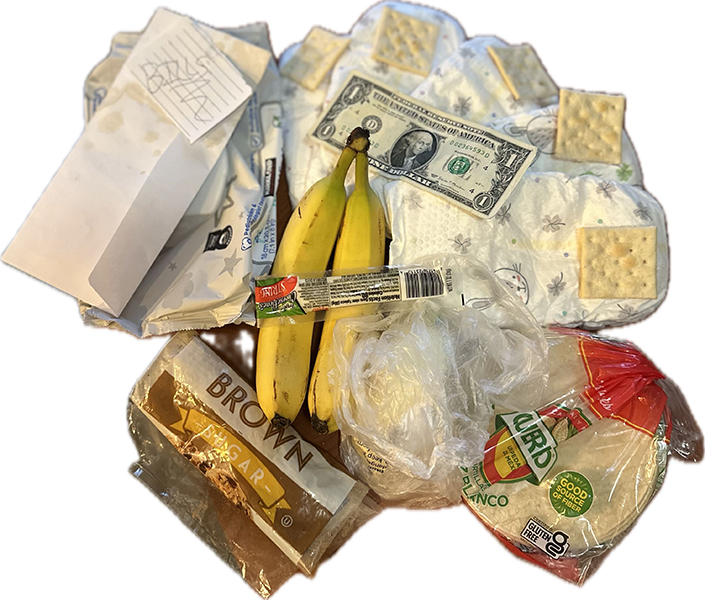
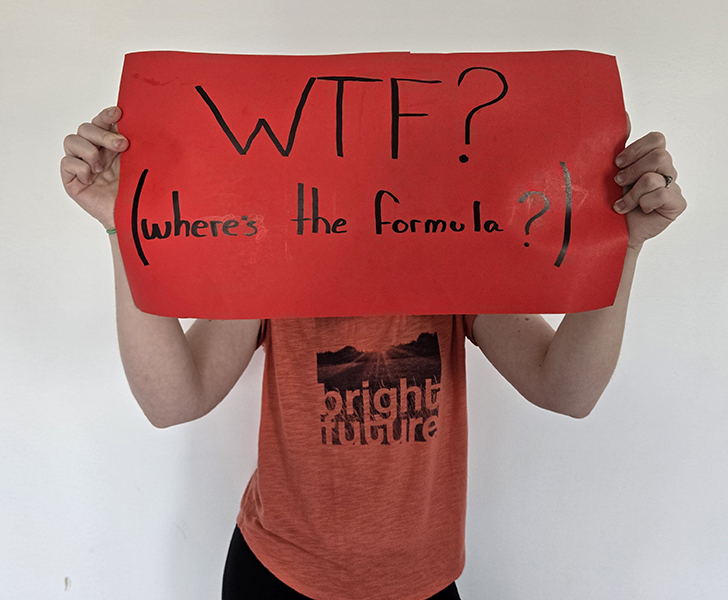
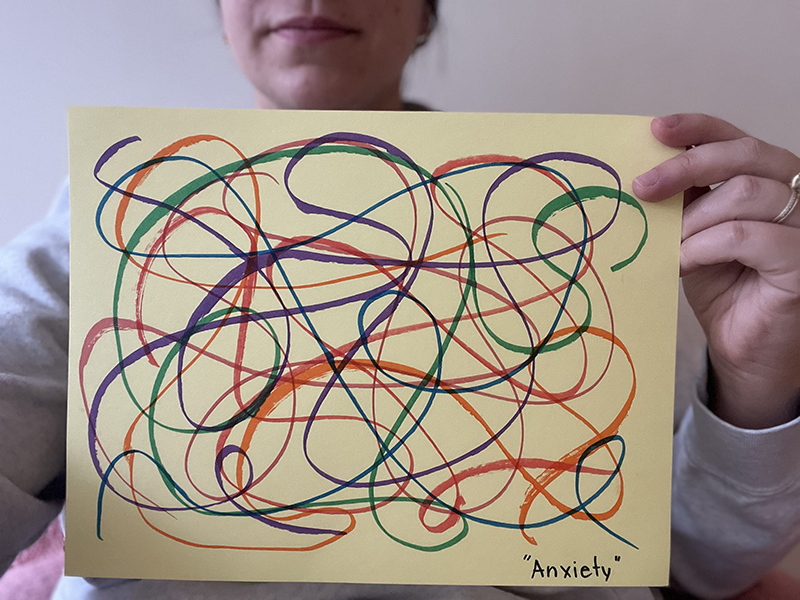
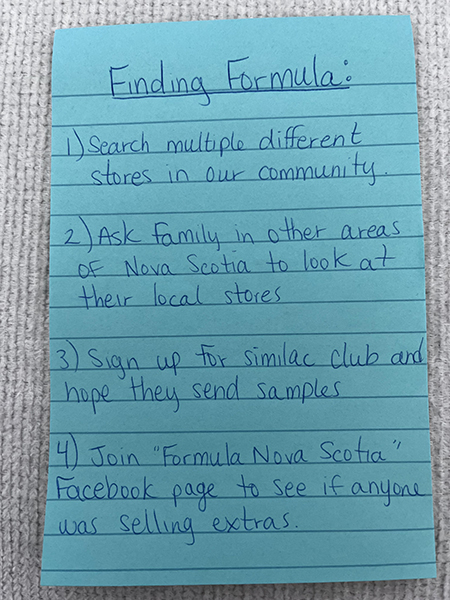
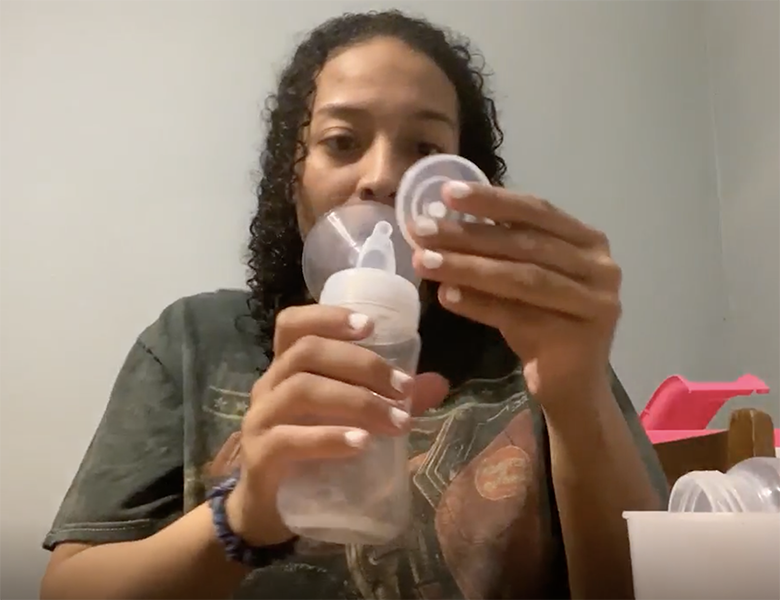
Examples of participant submissions by Julianne*, Emily, Liliana* and Dominique.
(click images to enlarge)
SIDE BAR FOR CALLOUT TEXT OR IMAGE
SIDE BAR FOR CALLOUT TEXT OR IMAGE
SIDE BAR FOR CALLOUT TEXT OR IMAGE
SIDE BAR FOR CALLOUT TEXT OR IMAGE
TKTKTKTKTKTKTK
Week 1: Getting to know you
Caregivers introduced themselves by video and told a story about how parenting had changed them. We asked participants to create an image that represented this change.
Week 2: Exploring your feeding work
Caregivers created short videos that highlighted three daily tasks they do to feed their children.
Week 3: Formula shortages
Caregivers shared what they had to do to find infant formula and how they felt about food insecurities related to formula shortages using lists, diary entries, poems, songs, collages, and body movement.
Week 4: “Making do” without enough money
Caregivers explored income-based food insecurity and how lack of money affected their ability to feed themselves, and their infants and young children. They shared images that represented what ‘payday’ meant to them in relation to their feeding work and drew puzzles of their income sources and/or resources they used to feed their families.
Image of participants’ view of the Indeemo platform.
Week 5: Who needs to hear your story?
The final task invited caregivers to think about moments that revealed how outside influences (people, policy, organizations, or institutions) affected their feeding in both negative and positive ways. Caregivers wrote letters, made videos, protest signs, and cartoon strips to tell someone with power or authority stories about the work of feeding children in difficult circumstances.
Collaboration was key to our approach. The research team was made up sociologists, researchers, a documentary filmmaker, and students in sociology, English, law and society, theater, politics, women and gender studies, and psychology. Students wrote vignettes, song lyrics, and were trained in qualitative analysis, video editing, data collection, and coding. We also worked with a choir. See the Project Team page for more details.
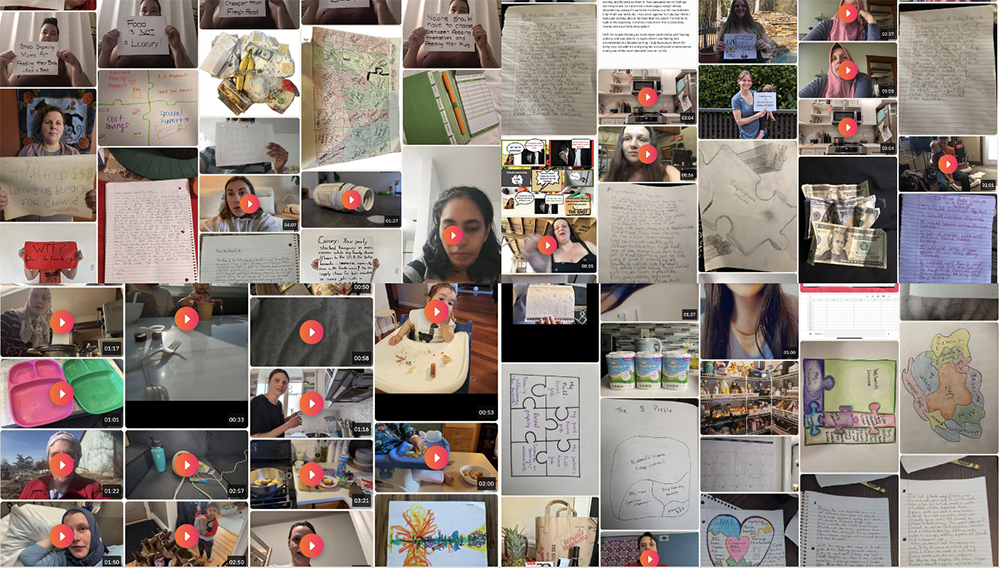
Image of participant submissions as they appeared to the researchers on the Indeemo platform.
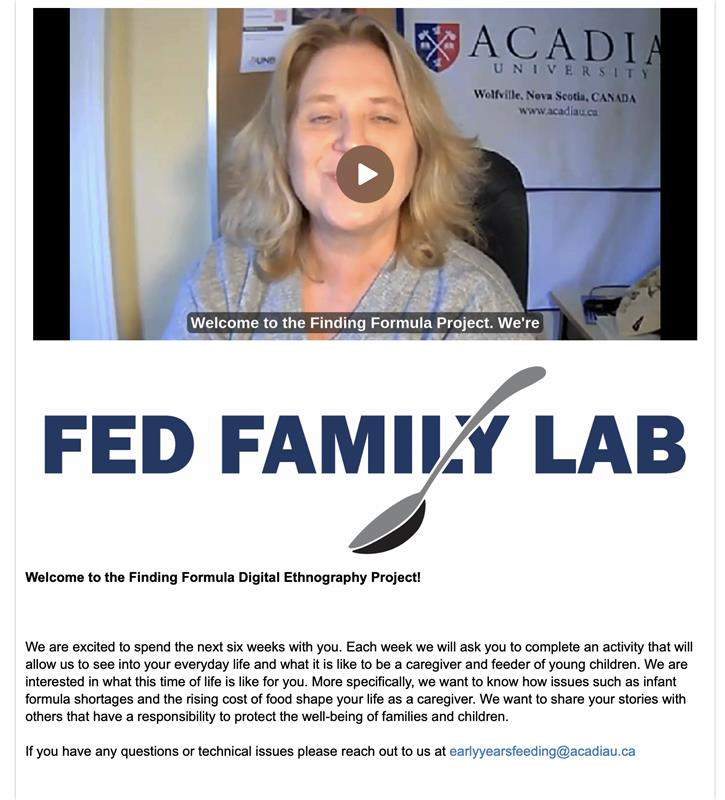
Image of research team as it appeared to participants on the Indeemo platform.
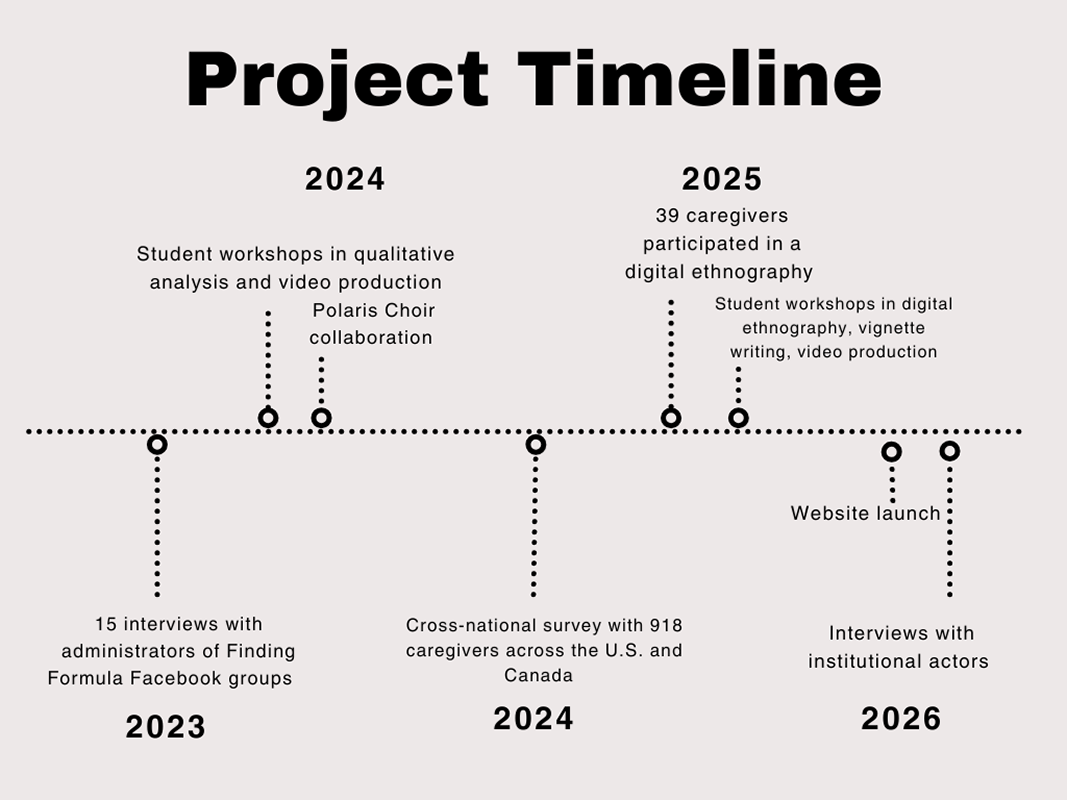
The final phase of the project will involve using the material on this website in interviews with institutional decision-makers.